Designing an app to improve the recovery process for heart attack survivors
We designed and prototyped an app that assisted heart attack survivors with their recovery through logging, analysis, and effective user interventions.
PROJECT DURATION
This project took place over 12 weeks as part of the Service Design Network's Practitioner Curriculum course.
MY ROLE
On this project, I worked alongside a team of other service designers to identify a problem and generate a solution. I've since built a semi-functional prototype that is in the process of being refined.
TASKS & DELIVERABLES
Desk research, user interviews, personas, service blueprint, co-creation, rapid prototyping, natural language processing
How Might We Improve the Recovery Journey for Someone Who's Recently Survived a Heart Attack?
Heart attacks are a leading cause of death and disability worldwide. People who survive a heart attack often face a long and challenging recovery process. They may need to make significant lifestyle changes, manage new medications, and cope with the emotional and psychological effects of their experience. We were challenged to design a service that facilitated the return to work processes for survivors of heart attacks as part of the Service Design Network's Practitioner Curriculum.
Desk Research & User Research
The first phase of the project was to develop a deep understanding of the problem that our solution is aiming to solve. This involved gathering data from a variety of sources, including stakeholders, literature, survivors, and doctors. Before we began doing any actual research, we sought to understand the expected vision for the service we were being asked to design to uncover any immediately known requirements or potential pitfalls we might need to plan around as we go into deeper research. Once we’d completed our preparatory research, we did some secondary research to understand common knowledge about heart attack recovery and ensure the direct user research we conducted after was not duplicative of information already uncovered and instead augmented the team’s knowledge. We used Google Scholar to find peer-reviewed journal articles about heart attack recovery, searched the websites of heart health associations (like the American Heart Association) to identify common resources and doctor recommendations for recovery, and scanned social media and other places on the internet where we could find direct quotes from heart attack survivors about their journey in recovering, including any pain points they faced.1 in 5 people who have a heart attack are readmitted into the hospital for their second within five years. Source: American Heart AssociationThrough our desk research, we uncovered that people who have suffered a heart attack often face a difficult and complex rehabilitation process. They may need to make significant lifestyle changes, manage new medications, and cope with emotional challenges. Returning to meaningful work can be especially challenging, as people may be worried about their physical and emotional health, and they may not have the support they need.

Determining Which Problem to Solve
this is where we talk about how we settles on the problem to solve. talk about how we reframed, how we validated, etc. this is where we might talk about reframing? also where we'd talk about co-creation with our research participant. how might we statement, opportunity statement, etc. The visual to use here is a very rudimentary service blueprint. If we have time, make some adjustments to it, or maybe even just put it into smaply. Bullet points: * user research to chat with a doctor who works with those who've survived heart attacks and someone who's rehabilitated afterward. * talk about the opportunity we saw to lower heart attacks in younger people due to the rise in those, especially among athletes.
Introducing Healthpeers
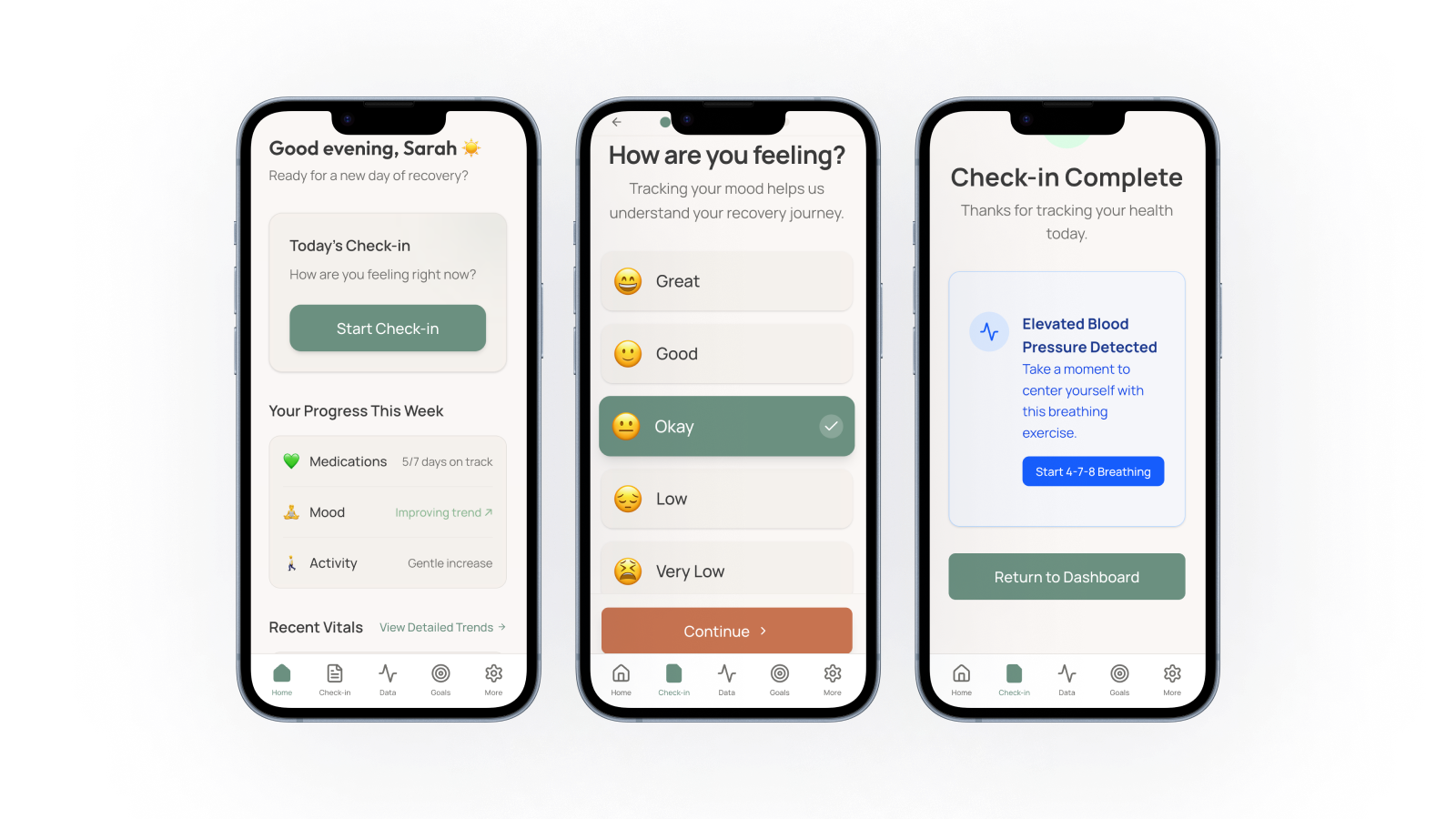
We designed a mobile app intended to help heart attack survivors with their recovery through daily logging of their mood and conditionally pairing that check in with a mindfulness exercise, a physical exercise, or a conversation with someone else who understands their needs. The app also includes an analysis function that helps survivors determine what might be their biggest recovery frustrations or triggers and share that information with their doctors.
Daily Check-ins
Here's What We Accomplished
The outcome of this work was a prototype for an app that displayed the service in action. We presented our prototype to a number of impacted parties and their feedback was overall quite positive. They were overall interested in hearing more updates about our work (even though it was a training project) and felt the solution was definitely a viable one that addressed an underserved need.
lorem ipsum quote about how this app is a good one that real people could use and benefit from.
See More Work
Lorem ipsum dolor sit amet. They're not convinced. Send them toward additional work that'll convince them.
See More WorkLet's Get Started
Send us a message to let us know how we can help. We look forward to hearing from you!
Contact Us